 HR
HR
 HR
HR


SCULPTURE COLLECTION
Within the sculpture collection, we highlight four of the most significant ones.
The complex sculptural composition is made of numerous human figures that are placed on the left side of the pedestal and the Fiddler on the right, who sits alone on a stone with spread legs and folds of a cloak that flows from all sides and makes it bigger and stronger than it actually is.
Inferiority and superiority are strongly emphasized in this composition of expressive and emphasized psychological tendencies.
Several variants of this sculptural group are known, one larger cast in bronze as well as two in plaster are kept in the HAZU glyptotheque.
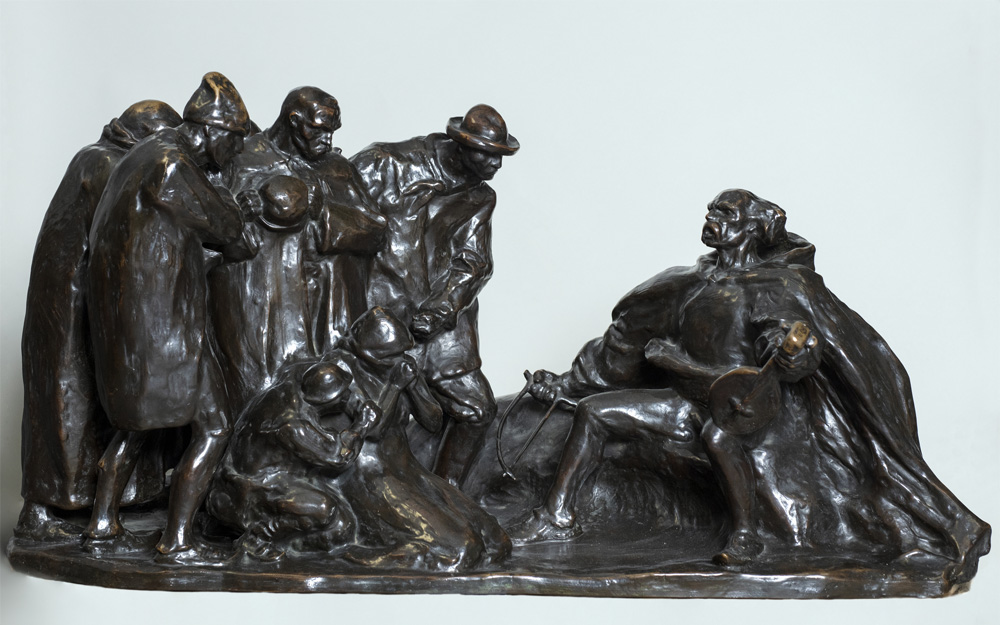
Robert Frangeš-Mihanović
The Fiddler, 1917-1922
bronze
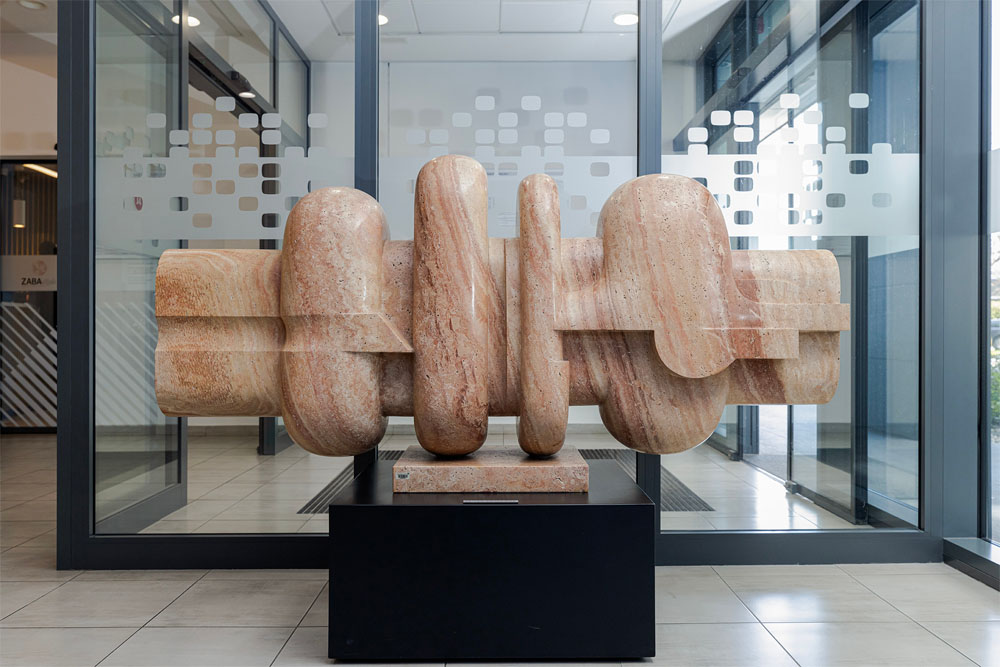
Dušan Džamonja
Untitled, 1990
marble
Dušan Džamonja, a Croatian sculptor prone to radical technical and formal experiments, united the organic and inorganic world of forms and sculptural materials, traditional and new, creating one of the most notable sculptural opuses of Croatian high modernism.
The sculpture is a free spatial construction of simple geometric forms and strong organic vitality, rounded rhythmic shapes in a horizontal series that build a composition of exceptional sculptural power.
Goldoni, by his basic vocation as a sculptor, developed his distinctive type of figuration, approaching a free organic form in the material of bronze, which is also expressed in this sculpture. The abstract composition of round, circular, concave-convex curled and twisted forms create a sculpture of almost futuristic anticipation.
"This overcoming, this orientation towards the new and the unknown is not – as some traditionalists think – an unimportant task that takes place on the periphery of the world and the artist's will. It is the essential will to which the entire talent, the entire personality of the artist, all the wealth of his enthusiasm is directed. This daring crossing of boundaries appears so brutal, feverish and shocking precisely because it is not only a crossing of traditional norms and a striving to overcome once inviolable authorities, but also a negation of everything that exists in a meaningless, mindless, inhuman world. It is the act of a truly original, rebellious man and a non-reconciliation with what exists, whether in artistic tradition or in human life."
(Raul Goldoni, 1976)
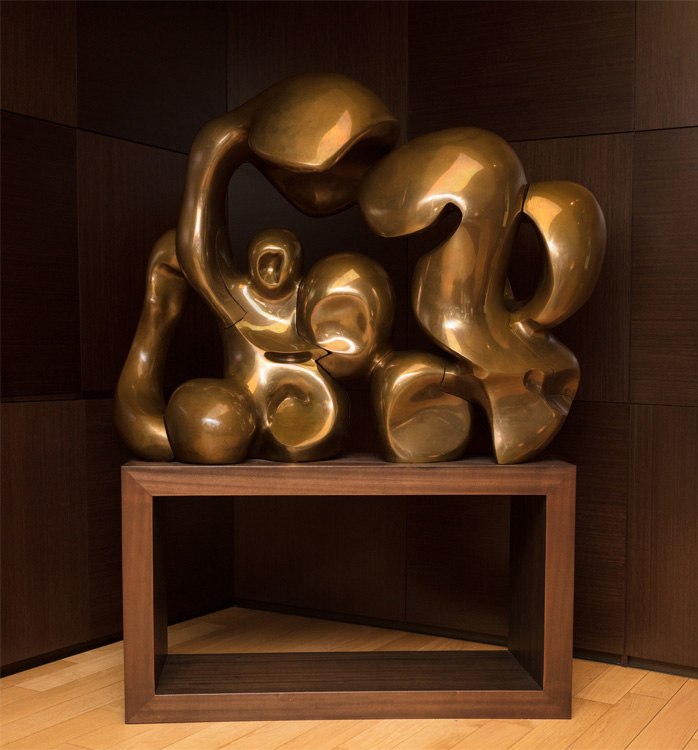
Raul Goldoni
Composition in space
bronze
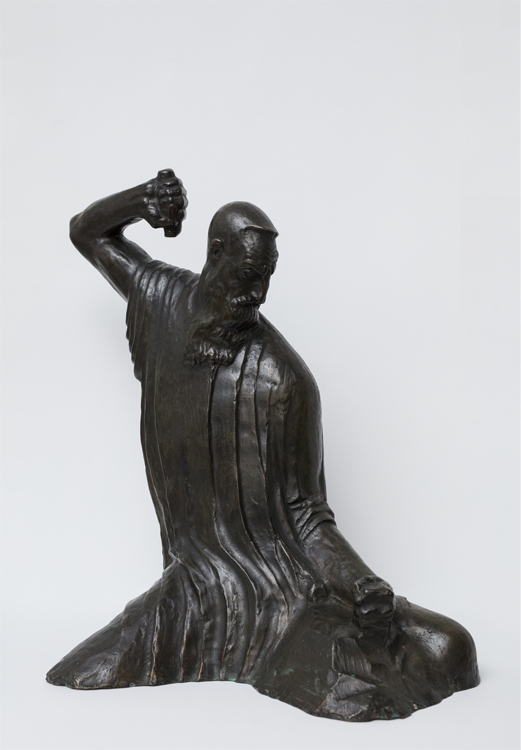
Ivan Meštrović
The Artist at Work – Auguste Rodin, 1914
bronze
The sculpture brings the artist of dramatic expressiveness into the enthusiasm of creating a work of art – a sculptor. The strong volume, movement and diagonals that build the composition evoke a sculpture of screaming strength and dynamics.
Meštrović is undoubtedly one of our most prominent sculptors who expressed the strength of expression of his characters with the most direct fidelity. Traces of Art Nouveau decorativeness are visible in the design of the dress, where the consistent rhythmic folds of the dress did not fade even due to a strong swing. The surface treatment is smooth, clean and clear with precisely expressed contour lines.
This is a work that Meštrović made in Rome in 1914. On that occasion, he made another sculptural portrait of Auguste Rodin, of larger dimensions, the plaster cast of which is in the holdings of the Meštrović Atelier, and the bronze one in the holdings of the Glyptotheque of the Croatian Academy of Sciences and Arts, as well as drawings. This specimen was cast on the same occasion as the one in the holdings of the Meštrović Studio, which also has a plaster cast.